
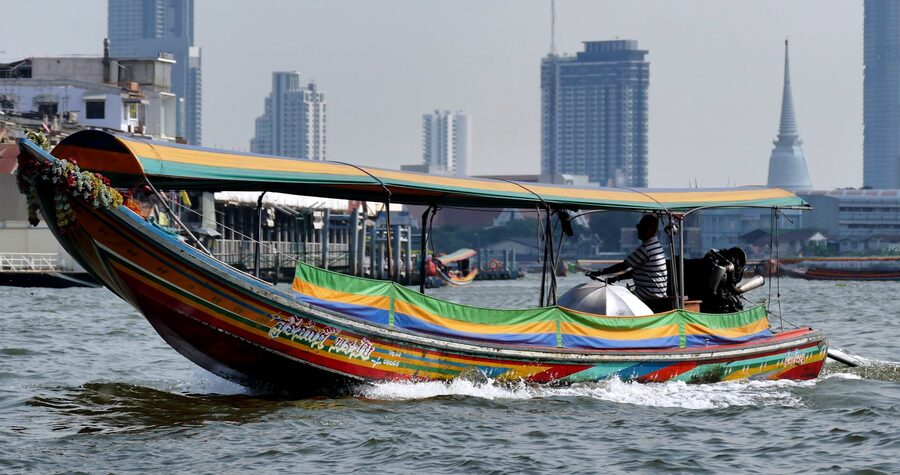
The engine sound was already at full throttle before I’d finished sitting down. Our longtail boat shot out from under the bridge and into a canal so narrow that the overhanging trees scraped the roof cover. A woman on the bank didn’t even look up from her laundry.
That’s Bangkok’s canal network. No fanfare, no tourist infrastructure, just a working waterway system that most visitors never see because they’re stuck on Sukhumvit Road wondering why the traffic hasn’t moved in forty minutes.
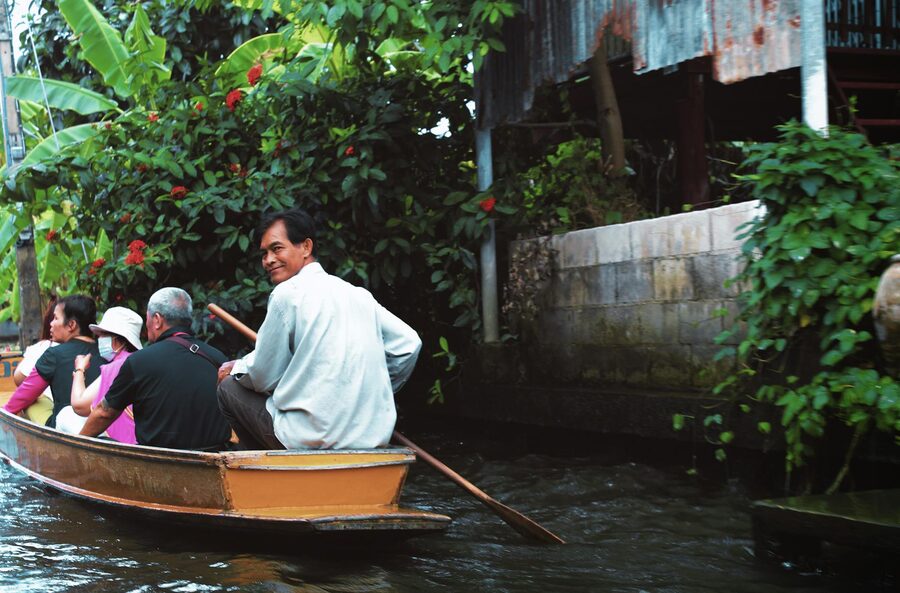
Bangkok used to be called the Venice of the East. It sounds like tourist-board nonsense, but there’s truth to it. The city was built around canals — called klongs — and until the 1960s, most people got around by boat. The government filled in hundreds of them to build roads. But the Thonburi side of the river still has a dense web of waterways where daily life happens the same way it has for a century.
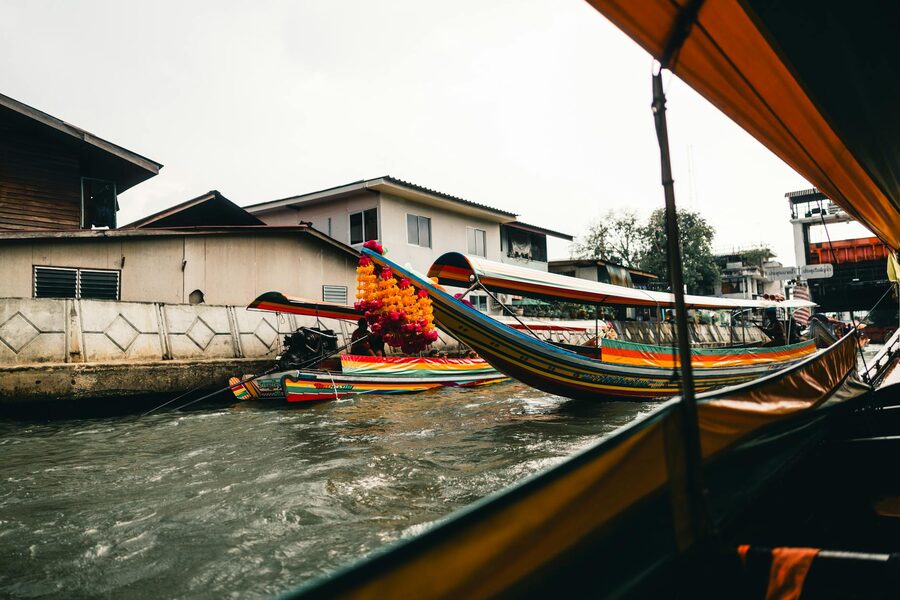
A canal tour by longtail boat is the single best thing I’d recommend to anyone visiting Bangkok for the first time. Better than temples, better than night markets, better than rooftop bars. It shows you a Bangkok that doesn’t exist anywhere else.
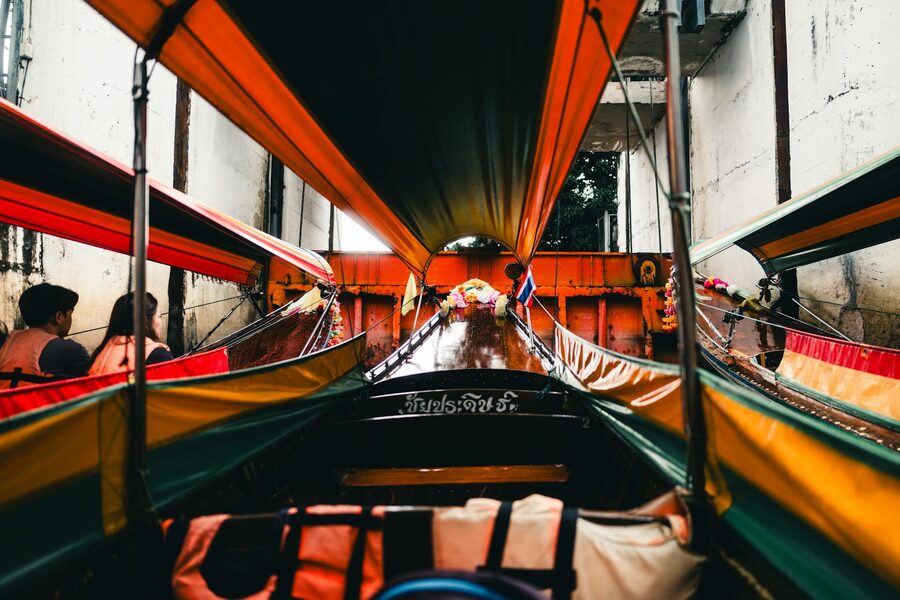
Short on time? Here are my top picks:
Best overall: Longtail Boat 2 Hrs Bangkok Canal Tour — $37.50. The most popular for good reason. Two hours, an English-speaking guide, and a route that covers the best canals plus Wat Arun.
Best budget: Bangkok Canal Tour by Longtail Boat — $22. Same 2-hour format, includes the Royal Barge Museum stop.
Best extended: Bangkok Longtail Boat Canal Tour to Wat Arun — $28. Three hours with more time in the smaller canals and a proper Wat Arun visit.
- How Canal Tours Actually Work in Bangkok
- Going It Alone vs. Booking a Guided Tour
- The Best Bangkok Canal Tours to Book
- 1. Longtail Boat 2 Hrs Bangkok Canal Tour — .50
- 2. Bangkok Longtail Boat Canal Cruise —
- 3. Bangkok Canal Tour by Longtail Boat —
- 4. Bangkok Longtail Boat Canal Tour to Wat Arun —
- When to Go
- Getting to the Pier
- Tips That Will Actually Help
- What You’ll See Along the Way
- The Klongs Beyond the Tour Route
- Planning the Rest of Your Bangkok Trip
How Canal Tours Actually Work in Bangkok
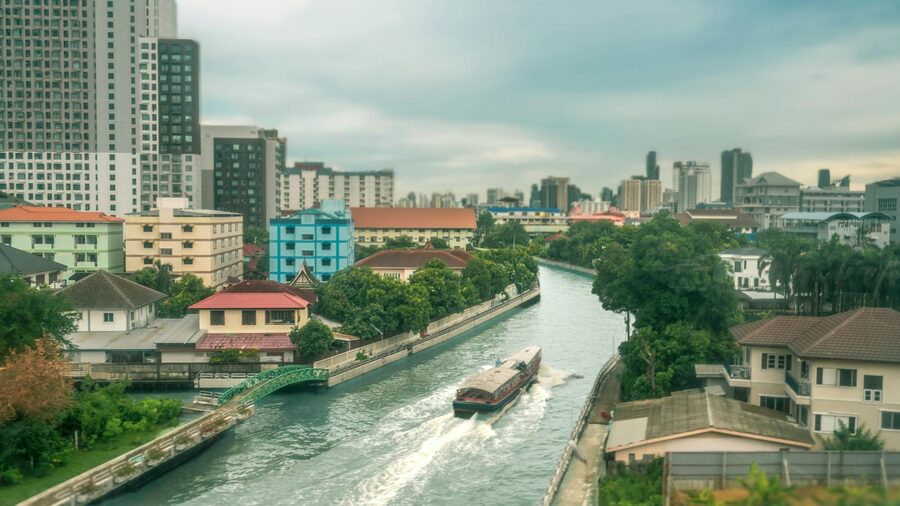
You have two options for getting on a longtail boat in Bangkok. The DIY approach involves going to Tha Chang pier (near the Grand Palace), finding a longtail boat driver, and negotiating a price. Expect to pay 1,000-1,500 baht for a one-hour trip, more if you want to go further. The drivers know a few routes and will take you through the main Thonburi canals.
The problem with DIY is that you get no commentary, the driver picks the route based on what’s fastest (not most interesting), and you’ll spend 20 minutes haggling before you even get on the water. I’ve done it both ways and honestly, the pre-booked tours are better value.
Pre-booked tours through platforms like GetYourGuide or Viator cost about the same as negotiating at the pier, but include an English-speaking guide, a planned route through the most interesting canals, and usually a stop or two at temples or local markets. Two hours is the sweet spot. One hour feels rushed. Three hours is good if you want to include Wat Arun properly.
Going It Alone vs. Booking a Guided Tour
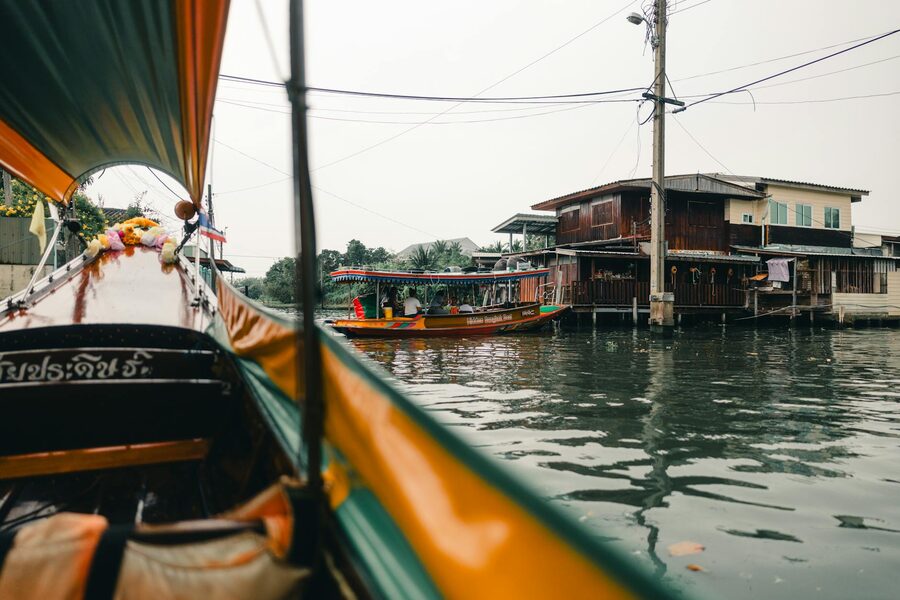
Going solo means showing up at a pier and negotiating. You get flexibility — stop where you want, change the route mid-trip, spend longer at spots that catch your eye. The downside is real: drivers don’t speak much English, you won’t know the history behind anything you’re seeing, and the routes tend to be the same well-worn path that every boat takes.
Guided tours lock you into a schedule but give you context. The guides on the better-reviewed tours know the neighborhoods, point out things you’d completely miss — the house where a specific royal family member lived, the temple that’s only open on certain days, the best spot to photograph monitor lizards (yes, they’re everywhere in the canals). The guides also navigate the tricky pier logistics for you, which alone is worth the booking fee.
For a first-time visit, book a tour. If you come back to Bangkok and want to explore further, go DIY.
The Best Bangkok Canal Tours to Book
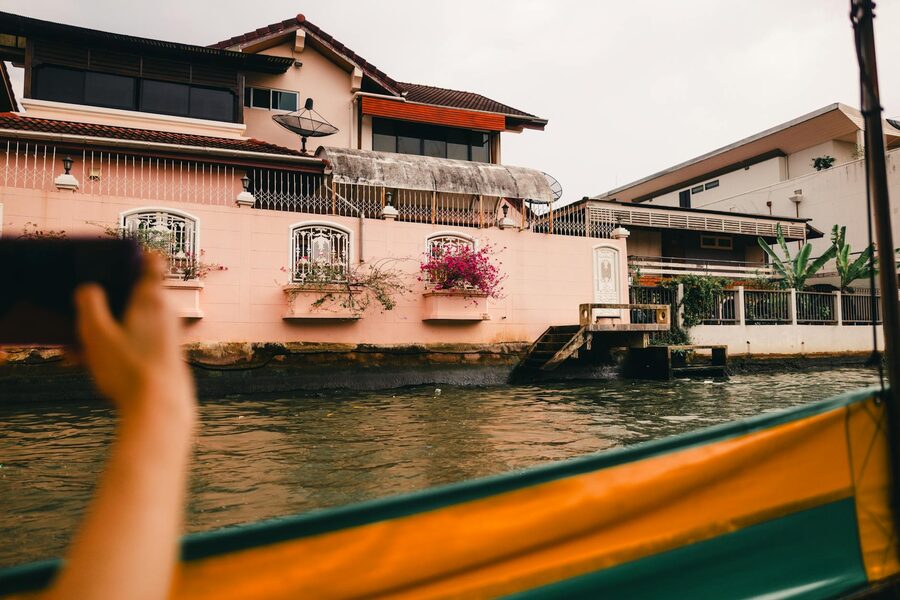
I’ve gone through the numbers on every major canal tour available in Bangkok. These four cover different budgets and durations, and all have enough reviews to trust.
1. Longtail Boat 2 Hrs Bangkok Canal Tour — $37.50
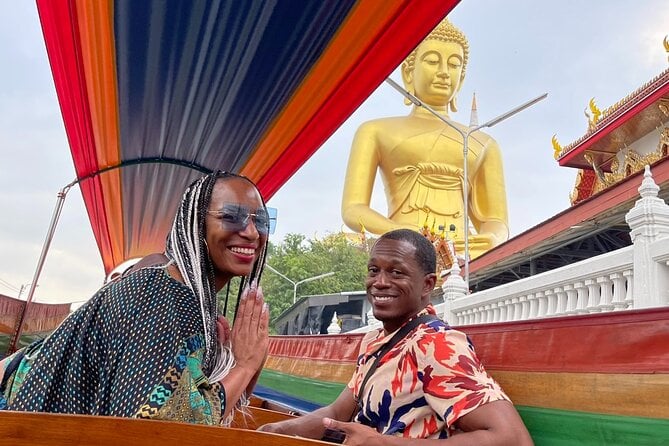
This is the tour I’d pick if someone asked me to choose one thing to do in Bangkok. Two hours on the water with an English-speaking guide who actually knows the canal neighborhoods. The route covers Klong Bangkok Noi and Klong Bangkok Yai — the two biggest canal networks on the Thonburi side — plus a pass by Wat Arun from the river.
At $37.50, it’s not the cheapest option, but the guide quality and route planning are noticeably better than the budget alternatives. The boat fits around 10-12 people, so it’s not one of those packed tourist barges. Nearly 6,000 people have booked and reviewed this one, and it holds a solid 4.5-star rating. That’s not easy to maintain at that volume.
The Grand Palace and Wat Arun tour covers the temples in detail if you want to combine both experiences into one day.
2. Bangkok Longtail Boat Canal Cruise — $36
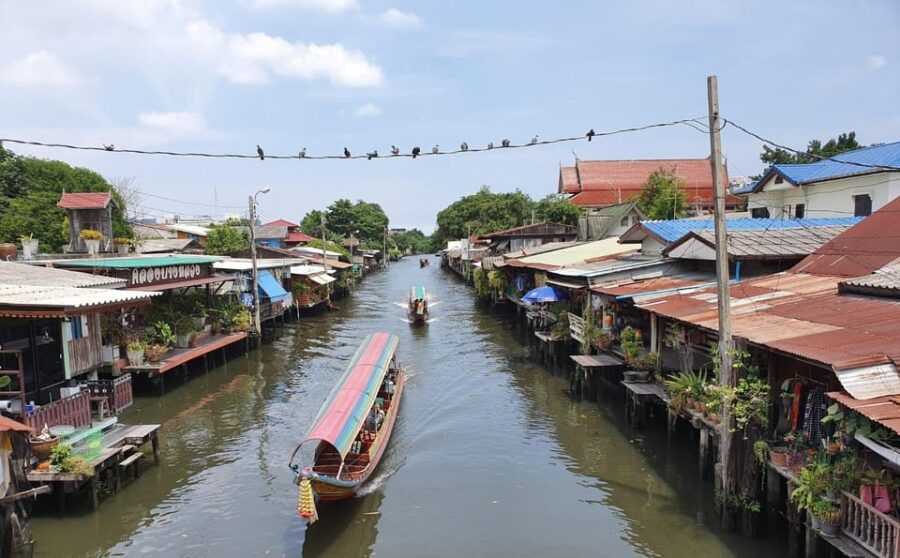
Very similar to the first tour in price and duration but run by a different operator. Two hours, English guide, longtail boat through Thonburi’s canals. The route focuses more on the residential canals and includes stops where you can interact with locals and see temple art up close.
Over 4,000 people have reviewed this one on GetYourGuide with a 4.4-star average. At $36, it’s a dollar fifty cheaper than the Viator option. The main difference is the route — this one spends more time in the narrow backwater canals and less time on the main river. If you want the deep-into-the-neighborhoods experience rather than the temples-from-the-water experience, this is the one.
3. Bangkok Canal Tour by Longtail Boat — $22
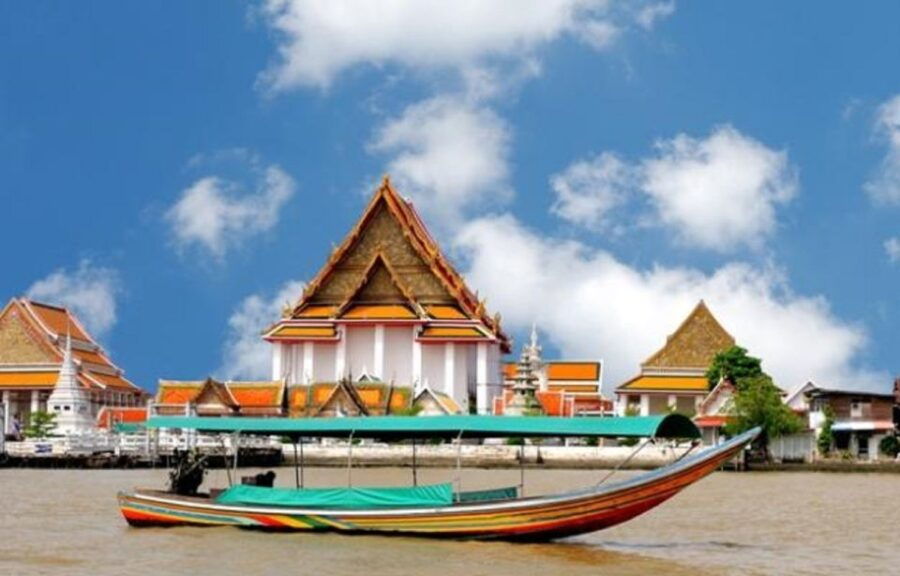
The cheapest guided canal tour with solid reviews. At $22 for two hours, you’re paying less than what a pier negotiation would cost, and you get a guide thrown in. This tour includes a stop at the Royal Barge Museum, which houses the ornate ceremonial barges used in royal processions. The museum itself is a 15-minute detour but worth it — the boats are stunning and you won’t go back on your own.
The 4.1-star rating from over 2,200 reviews is decent but lower than the top two options. The most common complaints are about rushed timing and larger group sizes. If your budget is tight, this delivers good value. But if you can stretch to $36-37, the top two tours are measurably better.
If you’re heading to the Ayutthaya day trip later in your Bangkok stay, the river and canal context from this tour helps you appreciate the historical water connections between the two cities.
4. Bangkok Longtail Boat Canal Tour to Wat Arun — $28
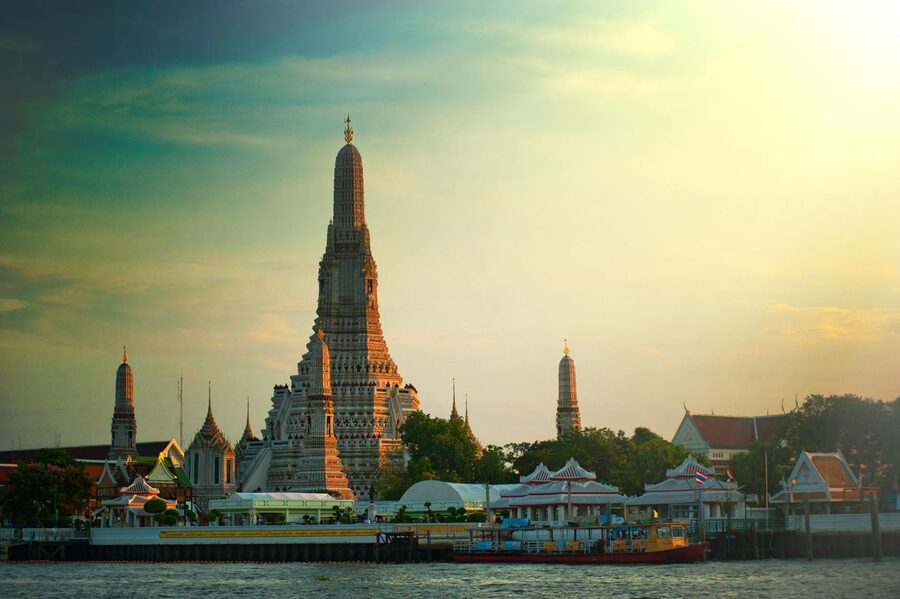
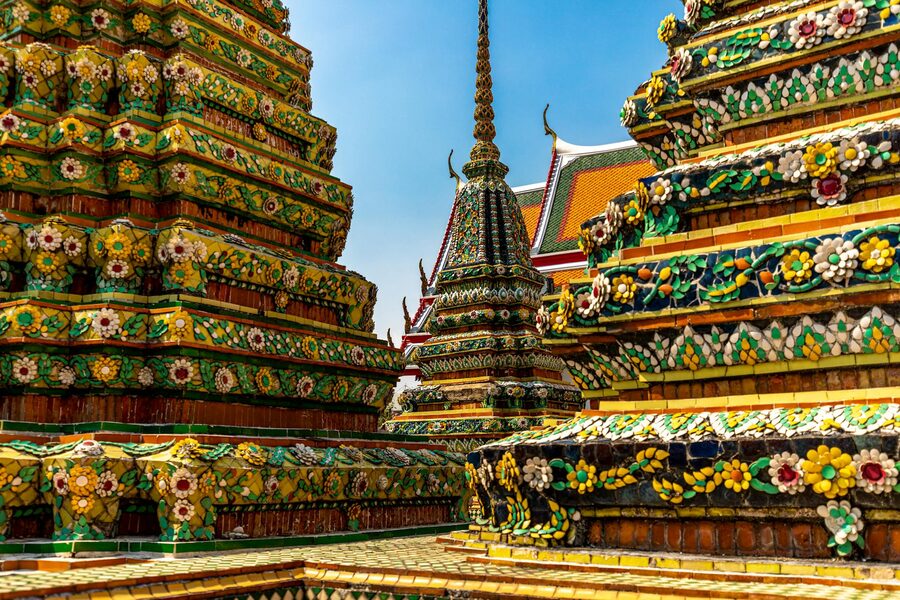
This is the only three-hour option on the list, and the extra hour makes a real difference. Instead of just passing Wat Arun from the water (which is what the 2-hour tours do), this one includes an actual stop where you can get off, walk the grounds, and climb the central spire. You also get more time in the deeper canals that the shorter tours skip because they’re too far from the pier to reach in two hours.
At $28 for three hours, the per-hour value is actually the best on this list. It’s newer with around 440 reviews and a 4.3-star rating. If you haven’t already visited Wat Arun on a separate temple tour, this combo is smart — you get the canal experience AND the temple in a single booking.
When to Go
Morning tours (8-10 AM) are my pick. The light is good, the canal communities are active — monks collecting alms, kids heading to school, food vendors firing up their stalls. The heat hasn’t hit full force yet either, which matters more than you think when you’re sitting in an open boat with no shade for two hours.
Afternoon tours (2-4 PM) work too, and you get better sunset light if your tour runs late enough to catch it. If you time it right, you can roll straight from a late canal tour into a dinner cruise on the Chao Phraya — same river, completely different atmosphere once the sun goes down. But the midday heat on the water is brutal. I’ve done both and the morning experience is just more alive.
Avoid rainy season canal tours (June-October) if you can. The canals flood, the water level rises to doorstep level in some neighborhoods, and the tour operators sometimes cancel because the boat can’t fit under certain bridges. November to February is peak season — cooler, drier, and the canal communities are most active.
Getting to the Pier
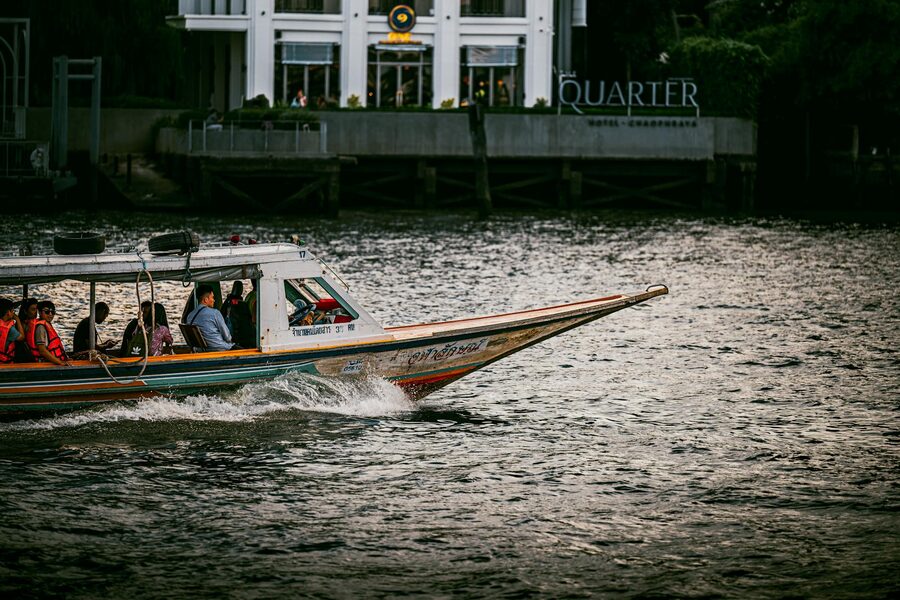
Most canal tours depart from piers on the Chao Phraya River near the old town. The exact pier depends on your tour operator, but these are the most common:
Tha Chang Pier — The easiest to reach. Take the BTS to Saphan Taksin, then the Chao Phraya Express Boat (orange flag line) upriver. The hop-on hop-off river boat pass is another option if you want to combine pier access with a full day of sightseeing along the waterfront. It’s the pier right next to the Grand Palace. If you’re doing a Grand Palace tour the same day, you’re already here.
Tha Phra Arthit Pier — In the Banglamphu area near Khaosan Road. Walking distance from the backpacker district. If you’re staying in the old town, this is likely closer.
Tha Maharaj Pier — Near the Tha Maharaj mall. Some of the newer tour operators use this as a meeting point because it has coffee shops and proper facilities where you can wait.
Taxis and Grab cars work fine to get to any pier. The piers are well-signed and hard to miss — look for the Chao Phraya Express Boat signs.
Tips That Will Actually Help
Bring a plastic bag for your phone. The longtail boats splash. A lot. Especially when passing other boats or hitting wakes from river traffic. I’ve seen two phones go into the canal in the space of one tour. A Ziploc bag is enough.
Wear sunscreen before you board. There’s minimal shade on a longtail boat, and two hours of equatorial sun will cook you. Reapplying on a moving boat is messy and annoying — do it at the pier.
Sit on the right side heading out. Most tours go counterclockwise through the canal system. The right side (facing forward) gives you better views of the houses and temples as you enter the narrower canals.
Carry 200-300 baht in small bills. Some tours stop at local markets or temple donation boxes. The vendors don’t have change for large bills, and the donation boxes don’t take cards.
Don’t bother with a fancy camera. The boat vibrates constantly from the engine, making telephoto shots nearly impossible. A phone is actually better here — wider angle, image stabilization, and you can stick it in your pocket when the water splashes.
What You’ll See Along the Way
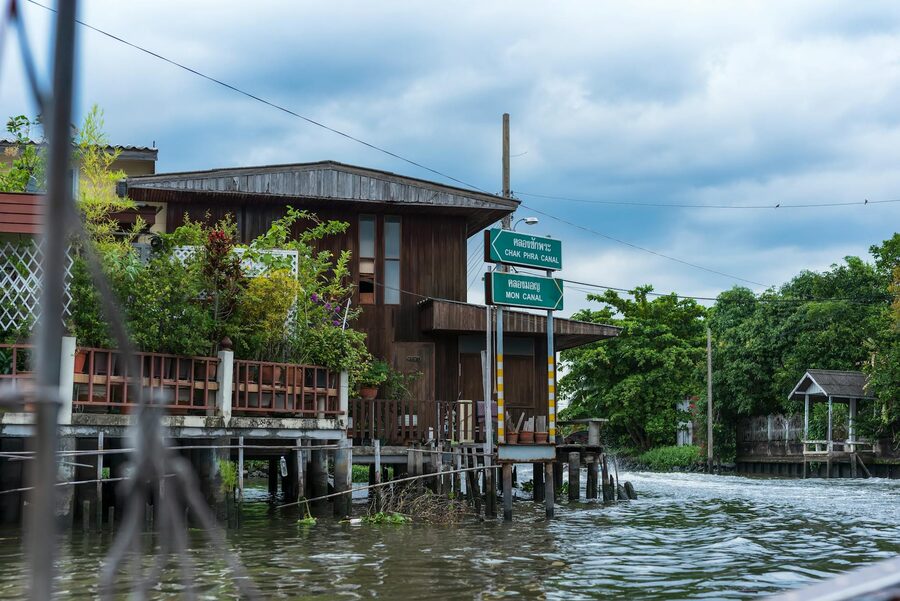
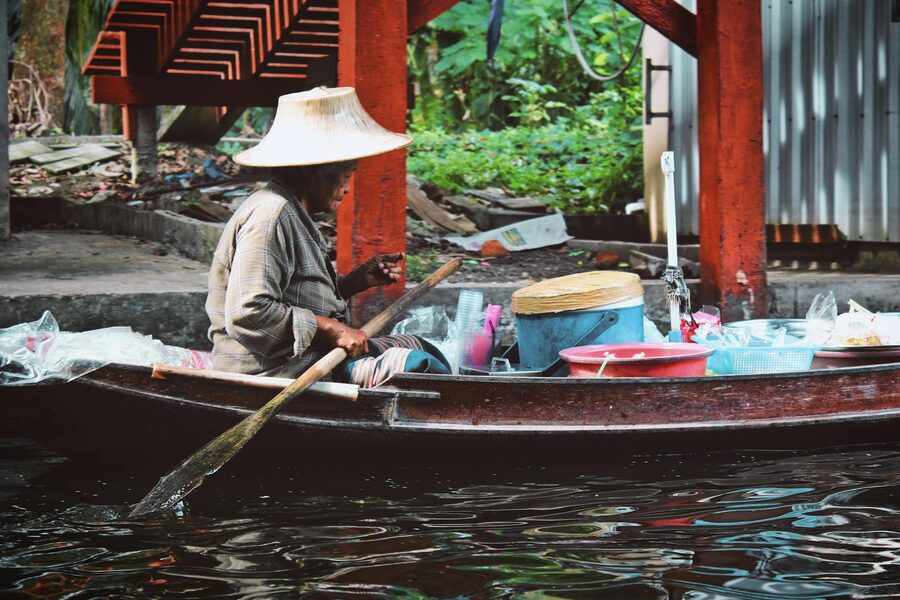
The Thonburi canals are a different world from tourist Bangkok. Wooden houses on stilts lean over the water at angles that seem structurally impossible. Kids cannonball off footbridges. Cats sleep on boat engines. Orchid farms line entire stretches of certain canals — the flowers grow here because the humidity is perfect.
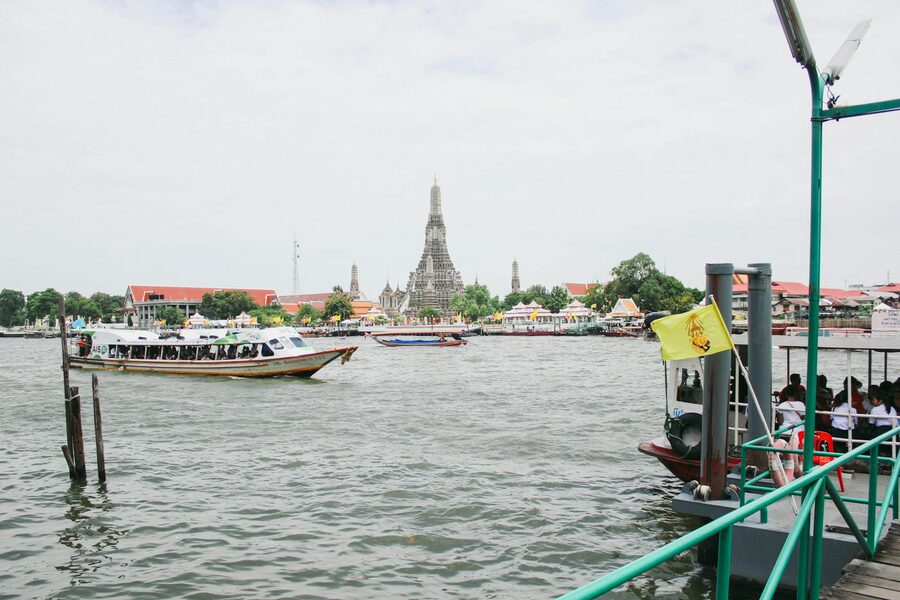
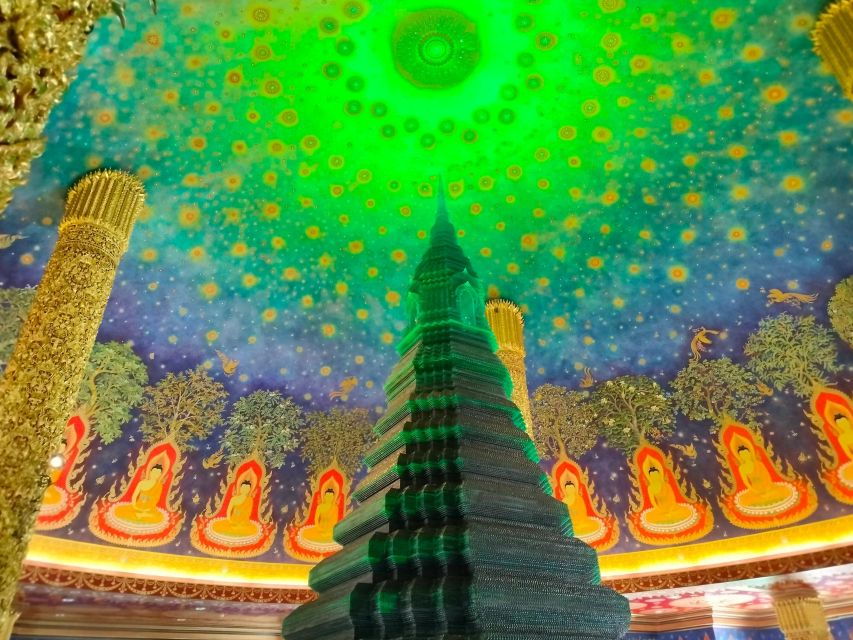
Most tours pass at least one active temple. The bigger tours stop at Wat Paknam (known for its green glass stupa that’s become an Instagram sensation) or the Artist’s House at Klong Bang Luang, where traditional Thai puppet shows happen in a 200-year-old wooden building. The puppet shows aren’t put on for travellers — they’ve been happening here since before canal tours existed.
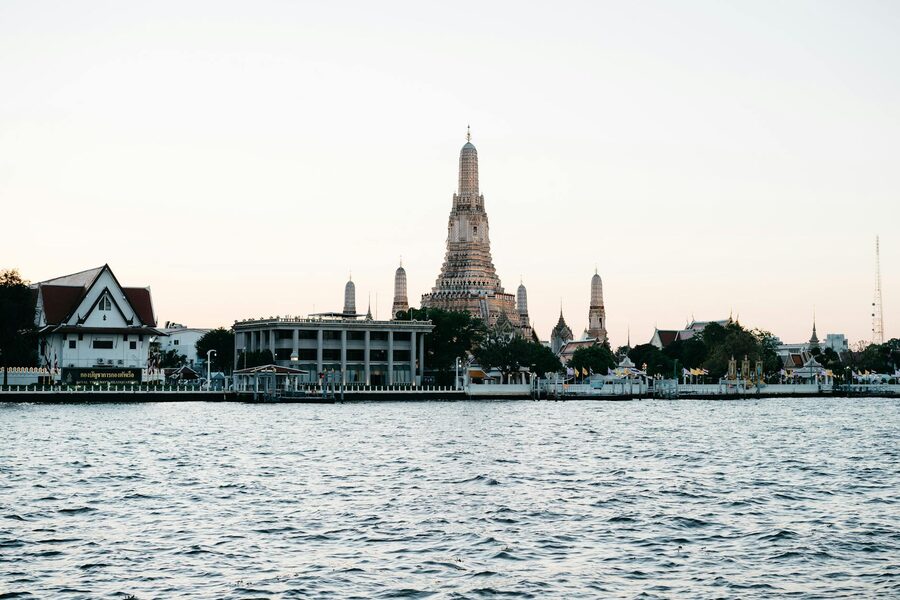
Monitor lizards are another thing. They’re everywhere in the canals — two-meter-long water monitors swimming alongside the boat or sunning themselves on the banks. They look terrifying but they’re harmless (unless you try to touch one, which… don’t). The guides treat them the way Londoners treat pigeons.
The canal-side markets are more authentic than the tourist-facing floating markets. If your tour stops at one, the prices are what locals pay. Don’t haggle too hard — these aren’t tourist-markup stalls. If you want the full floating market experience with the boats piled high with fruit and noodles, that’s a separate trip worth booking to Damnoen Saduak or Amphawa.
The Klongs Beyond the Tour Route
Bangkok has over 1,100 canals. The tours cover maybe six of them. If you get hooked on the canal atmosphere (and many people do), there are ways to go deeper.
Klong Saen Saep runs east-west through central Bangkok and has a public boat service that locals use as commuter transport. It’s not scenic — the water is grey and the stops are basic concrete platforms — but it’s fast and costs 10-20 baht per ride. During rush hour, it’s actually faster than any road transport in the city.
Klong Lat Mayom on Bangkok’s western edge has a weekend floating market that’s genuinely local. Fewer travellers, better food, and you can rent a boat to explore the surrounding canals. It’s harder to reach (you’ll need a taxi from the BTS), but it’s the closest you’ll get to seeing how the canals functioned before cars took over.
A guided bike tour is another way to explore these outer canal neighborhoods at ground level — several routes follow the klong paths through Thonburi.
The canal system connects to the river network that runs all the way to Ayutthaya — the old capital, 80 kilometers north. Historically, boats were the only way to travel between the two cities. The Ayutthaya day trip is one of the most popular excursions from Bangkok, and understanding the water connections makes the history click into place.
Planning the Rest of Your Bangkok Trip
A canal tour works well as a morning activity, which leaves the rest of the day open. The Grand Palace and Wat Arun tour pairs naturally since you’ll recognize the landmarks from the water, and most departures are from the same pier area. If you want to stay on the river into the evening, the Chao Phraya dinner cruises pass the same temples you saw from the longtail but lit up after dark — a completely different experience from the same stretch of water.
For exploring Bangkok’s neighborhoods on land, a food tour through Chinatown or the old town covers the streets that run parallel to the canals, and a tuk-tuk night tour hits the temples and markets after the crowds thin out. The floating markets at Damnoen Saduak are more touristy than the canal neighborhoods you saw on the longtail, but worth doing once for the spectacle.
If you have a few days in Bangkok, the Muay Thai boxing scene is unlike anything else in Southeast Asia. And for day trips, Ayutthaya is an easy train ride north — after seeing the canal system, the water connections between the old and new capitals make a lot more sense. Further afield, Chiang Mai’s cooking classes and elephant sanctuaries are two of the strongest experiences in Thailand.
This article contains affiliate links. If you book through our links, we earn a small commission at no extra cost to you. This helps us keep writing detailed booking guides like this one.